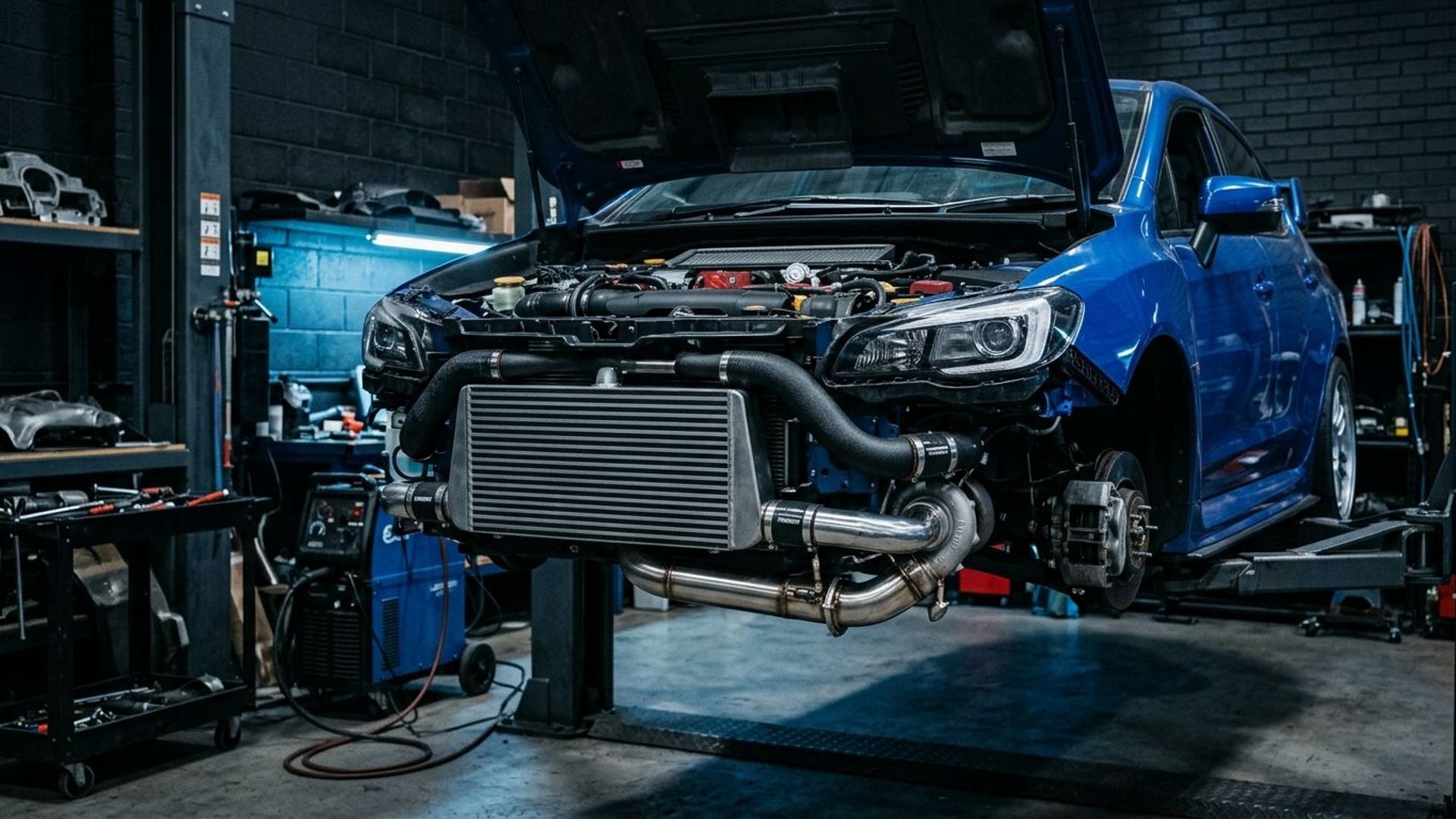
Stage 2 remapping means the ECU calibration is developed for a vehicle that has had supporting hardware modifications fitted. Unlike Stage 1 — which works with completely standard components — Stage 2 assumes the engine can flow more air, exhaust more freely, or cool the intake charge more effectively than the factory setup allows.
Stage terminology is not standardised
There is no engineering body or formal standard that defines what Stage 1, Stage 2 or Stage 3 means. These are industry conventions that have emerged over time. Different tuners, different platforms and different countries may use the terms slightly differently. The core principle is consistent: Stage 2 means hardware modifications support a more aggressive calibration than standard components would safely allow.
This is important because it means there is no universal Stage 2 specification. What counts as Stage 2 on a 2.0 TFSI is different from what counts as Stage 2 on a 3.0 TDI. The hardware required depends entirely on what limits the specific engine at Stage 1 power levels.
Why hardware matters
At Stage 1, the calibration is developed within the limits of the standard components. The factory turbo, intercooler, exhaust and intake system define the ceiling. Stage 2 raises that ceiling by upgrading the components that were limiting further gains.
For example, a standard exhaust system may create too much back-pressure to support higher boost targets. A standard intercooler may not reject enough heat to keep intake temperatures safe at sustained high loads. A standard intake may restrict airflow at the higher mass flows a Stage 2 calibration demands.
Common Stage 2 hardware considerations
The modifications most commonly associated with Stage 2 tuning include:
- Performance exhaust — typically a decat or sports-cat downpipe on turbocharged vehicles, reducing back-pressure and allowing higher exhaust flow
- Upgraded intercooler — larger core or more efficient design to keep intake temperatures lower under sustained load
- Performance intake — higher-flow air filter or intake system to reduce restriction at increased boost
- Uprated fuelling — larger injectors, higher-flow fuel pump or increased rail pressure capacity on vehicles that reach their standard fuelling limit
- Clutch upgrade — on manual vehicles, the standard clutch may slip at Stage 2 torque levels
Why a generic parts list is misleading
Stating that every Stage 2 car needs the same modifications is technically incorrect. Some engines are exhaust-limited at Stage 1 — they need a freer exhaust to gain further. Others are intercooler-limited — they need better cooling. Some are neither, and the limiting factor is the turbo's compressor map, meaning Stage 2 gains from bolt-on hardware alone are modest.
The correct approach is to identify what limits a specific engine at its current calibration and address that bottleneck. A genuine specialist will tell you which hardware your vehicle actually needs rather than selling a standard package that may not match your engine's limiting factors.
Software must match hardware
A Stage 2 calibration developed for a decat downpipe and upgraded intercooler will not perform correctly on a vehicle that only has one of those modifications fitted. The file is calibrated assuming specific flow characteristics and thermal performance. Running a Stage 2 file on partially modified hardware — or a Stage 1 file on fully modified hardware — means the calibration does not match the engine's actual behaviour.
This is why communication with your tuner matters. They need to know exactly what is fitted so the file can be developed to match your specific combination of hardware.
Thermal management at Stage 2
Higher power levels generate more heat. At Stage 2, exhaust gas temperatures increase under sustained load, intake charge temperatures rise faster during spirited driving, and the cooling system works harder to maintain safe engine temperatures. This is one reason why intercooler upgrades are common at Stage 2 — the standard unit may cope at Stage 1 levels but become inadequate at the higher sustained loads Stage 2 produces.
Drivetrain considerations
At Stage 2 torque levels, the drivetrain becomes a critical consideration. The clutch, gearbox, differential and driveshafts are all designed for the factory torque output plus a safety margin. Stage 2 may exceed that margin on some vehicles.
Common drivetrain considerations:
- Manual clutch — standard clutches may slip at Stage 2 torque, requiring an uprated clutch kit
- Automatic/DSG gearbox — torque limiters in the gearbox software may need revision, or the clutch packs may reach their capacity
- Differential — particularly on front-wheel-drive vehicles, the differential may struggle with significantly increased torque
- Driveshafts — rarely an issue at Stage 2 but worth noting on high-torque applications
Stage 2 vs Stage 1: the practical difference
Stage 1 is the entry point — maximum gains from software alone on standard hardware. Stage 2 extends beyond what standard components can support. The driving experience at Stage 2 is noticeably more aggressive: stronger acceleration, higher peak output, and typically a more urgent engine character. It suits enthusiasts who want more than Stage 1 offers and are willing to invest in supporting hardware.
Beyond Stage 2
Some vehicles have a further stage (often called Stage 2+ or Stage 3) involving a larger turbo, upgraded engine internals, or significant fuelling system changes. At this level, the project moves from bolt-on modifications to a more involved build. The costs, complexity and maintenance requirements increase significantly.
Matched to your build
We develop Stage 2 calibrations specifically for the hardware you have fitted. Tell us exactly what modifications are installed, and we will build the file to match — no generic downloads, no assumptions about what might be on the car.
Key takeaways
- Stage 2 is not a formal engineering standard — it is an industry convention meaning 'calibrated for modified hardware'.
- The specific hardware required varies significantly by vehicle, engine and turbo type.
- Common Stage 2 modifications include exhaust, intake, intercooler and sometimes fuelling upgrades.
- The software must be matched precisely to the installed hardware — generic files are risky.
- Drivetrain limits (clutch, gearbox, differential) become critical considerations at Stage 2 power levels.
Frequently asked questions
Do I need all the modifications before getting a Stage 2 remap?
Yes. The calibration must be developed for the hardware that is actually fitted. Installing the file before the hardware is complete means the software does not match the engine's real airflow and thermal characteristics.
Is Stage 2 reliable for daily driving?
It can be, provided the hardware is good quality, properly installed, and the calibration is developed responsibly within the upgraded components' limits. Stage 2 does increase the load on drivetrain components, so maintenance and component condition become more important.
How much more power does Stage 2 add over Stage 1?
It varies significantly by engine and hardware. On some platforms the difference is modest (10–15% over Stage 1). On others, particularly where Stage 1 was limited by exhaust restriction or intercooler heat soak, the gain can be substantial. We will give you realistic expectations for your specific vehicle.
Can I go straight to Stage 2 without doing Stage 1 first?
Technically yes, but Stage 1 is usually the better starting point. It lets you experience the improvement on standard hardware, confirm the vehicle is healthy, and then decide whether you want more. Going straight to Stage 2 means spending on hardware before knowing whether you would have been happy with Stage 1.
Does Stage 2 void my warranty?
Any modification — hardware or software — that contributes to a failure can affect a warranty claim. Stage 2 involves both visible hardware changes and software modification, making it more apparent than Stage 1 alone. See our warranty guide for the full picture.
Want advice for your vehicle?
Speak to a specialist for honest, no-pressure guidance tailored to your car and how you drive.