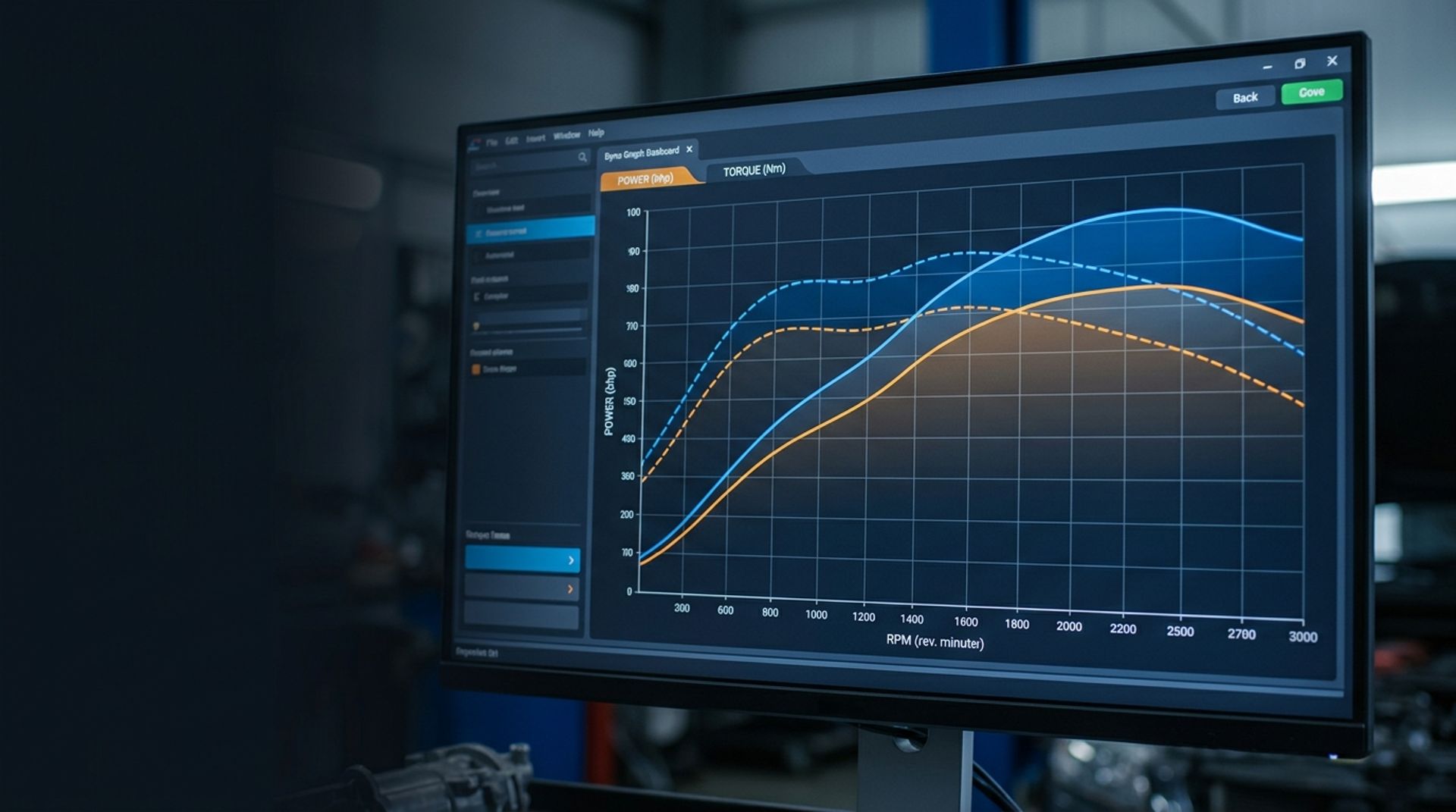
A Stage 1 remap is the most popular tuning upgrade for a reason: it delivers a genuine transformation in how your car drives without requiring a single hardware change. The calibration is developed entirely within the limits of your standard components — turbo, intercooler, exhaust, intake, injectors and gearbox — and released through better software alone.
What Stage 1 actually means
Stage 1 means the file is calibrated for a completely standard vehicle. Nothing needs to be fitted, upgraded or removed. The tuner works with what the manufacturer installed and optimises how those components are used through revised ECU software. It is the entry point to tuning and the upgrade that delivers the highest return relative to its cost.
What ECU parameters are calibrated
On a modern torque-based engine management system, a Stage 1 calibration typically adjusts several interrelated maps and strategies. The specific parameters vary by ECU platform, but commonly include:
- Torque request maps — the primary driver targets that the ECU uses to calculate how much power to deliver at each throttle position and engine speed
- Boost pressure targets — revised within the standard turbo's reliable operating envelope
- Fuelling and injection timing — optimised for UK pump fuel quality rather than global worst-case assumptions
- Torque limiters — raised to allow the engine to deliver its revised targets rather than being software-capped
- Throttle response mapping — refined for sharper, more progressive response without artificial delays
- Smoke and emissions limiters — adjusted where appropriate to allow cleaner, more efficient combustion at higher loads
These changes are not made in isolation. A properly developed file adjusts them as an integrated set so the engine management system remains internally consistent. This is why a bespoke calibration is fundamentally different from altering a single value in a table.
Why gains vary between vehicles
Two identical cars do not always gain the same amount from a Stage 1 remap. Several factors influence the outcome:
- Engine type and generation — newer turbocharged engines with electronic boost control typically gain more than older or naturally aspirated units
- Turbo size and efficiency — a turbo with headroom delivers more than one already running near its limit in factory trim
- Fuel type and quality — diesel engines generally show larger torque gains; petrol engines respond well but the character differs
- Vehicle condition — a well-maintained engine with healthy components responds more predictably
- Gearbox torque rating — on some vehicles the gearbox limits how much torque the calibration should request, not the engine
- Altitude and climate — a standard turbo running at altitude has less headroom than one at sea level
What should be checked first
A Stage 1 remap amplifies the current state of the engine. Before tuning, the vehicle should be in good mechanical order:
- Engine oil at the correct level and within its service interval
- No boost leaks or split intercooler hoses
- Turbo in healthy condition with no excessive shaft play
- No stored fault codes indicating sensor failures or component faults
- Cooling system functioning correctly
- Appropriate service history for the vehicle's mileage
We carry out a diagnostic health check before loading any file. If something needs attention first, we will tell you honestly rather than tuning a vehicle that is not ready for it.
Who Stage 1 suits
Stage 1 is the right choice if you:
- Want a noticeable improvement in performance and response without modifying hardware
- Drive daily and value reliability as much as gains
- Tow a caravan, trailer or horsebox and want more usable torque
- Want better fuel economy by allowing the engine to work less hard at cruising speeds
- Are looking for the best value-for-money upgrade on your vehicle
- Prefer to keep things simple with no additional maintenance
The difference between Stage 1 and a generic file
Not all Stage 1 remaps are equal. A file downloaded from a bulk supplier and loaded without vehicle-specific verification is technically a Stage 1 map, but it has not been calibrated for your individual car. A properly developed Stage 1 remap is matched to your specific ECU variant, verified on the vehicle, and backed by a specialist who understands the platform.
The natural starting point
For the vast majority of drivers, a Stage 1 remap is all they ever need. It gives the best balance of gains, reliability and value — and it is fully reversible if your situation changes.
Key takeaways
- A Stage 1 remap works with your car exactly as it left the factory — no parts required.
- It optimises boost, fuelling, torque limits and throttle response within standard hardware limits.
- Gains vary significantly by engine type, forced induction, fuel and vehicle condition.
- Your vehicle should be in good mechanical health before tuning.
- Stage 1 suits daily drivers, towing vehicles, economy seekers and enthusiasts who want gains without hardware changes.
Frequently asked questions
Do I need any modifications for a Stage 1 remap?
No. Stage 1 is developed for a completely standard vehicle with no hardware changes required. That is precisely what defines it as Stage 1.
How long does a Stage 1 remap take?
Typically between one and three hours including the pre-tuning health check, software development, loading and road testing. Some vehicles with more complex ECU access methods take longer.
Is Stage 1 enough, or should I go further?
For most drivers, Stage 1 is the ideal balance. It delivers a genuine transformation without hardware changes, additional maintenance or cost. Stage 2 and beyond suit enthusiasts who have already fitted supporting modifications.
Will a Stage 1 remap affect my fuel economy?
It can improve economy if you maintain the same driving style, because the engine produces more torque at lower revs and needs less throttle input to maintain speed. If you enjoy the extra performance enthusiastically, fuel use may increase. The outcome depends on your right foot.
Can a Stage 1 remap be removed?
Yes. We store your original factory file and can return the ECU to standard software at any time. The process is fully reversible.
Want advice for your vehicle?
Speak to a specialist for honest, no-pressure guidance tailored to your car and how you drive.