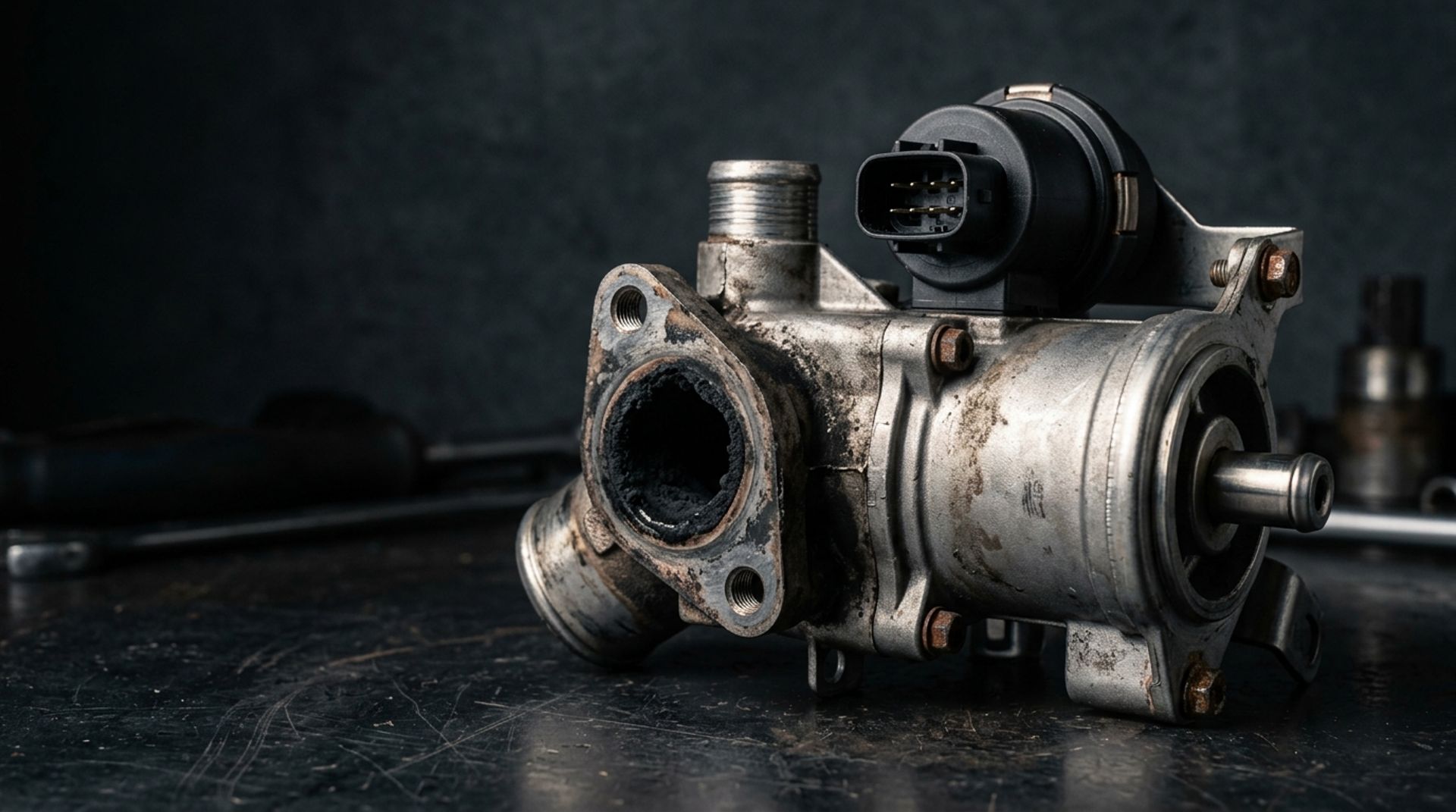
The EGR (Exhaust Gas Recirculation) valve is a small part that plays a big role in a diesel's emissions — and it is a common cause of running problems as a car gets older. Here is a plain-English guide to what it does, why it causes trouble and the fact that we have solutions when it does.
What the EGR valve does
The EGR valve recirculates a portion of exhaust gas back into the engine. This lowers combustion temperatures, which in turn reduces the nitrogen oxides the engine produces. It is a simple idea that helps modern diesels meet emissions rules.
Why it causes problems
Because it constantly handles hot, sooty exhaust gas, the EGR valve gradually becomes clogged with soot and carbon. Over time it can stick or fail to seal, which affects running and economy. When the EGR starts to cause problems, we have solutions to sort it out.
Warning signs to watch for
Common signs of an EGR fault include:
- Rough or lumpy idling
- Hesitation or a flat spot under acceleration
- An engine warning light on the dashboard
- Higher fuel use or poor economy
We have the solution
Whatever EGR issue you are facing, we have solutions to sort it out. Talk to us about your vehicle and we will explain the best way forward.
Key takeaways
- The EGR valve recirculates exhaust gas to lower combustion temperatures and emissions.
- Over time it clogs with soot and carbon, which affects running and economy.
- A faulty EGR can cause rough idling, hesitation and warning lights.
- When the EGR causes problems, we have solutions to sort it out.
Frequently asked questions
What does the EGR valve actually do?
It recirculates a portion of exhaust gas back into the engine to lower combustion temperatures and reduce NOx emissions. Because it constantly handles sooty gas, it gradually builds up carbon over time.
Can a clogged EGR valve be cleaned?
Sometimes. A valve that is simply carboned up may clean up well, but one that has failed mechanically or electrically needs replacing. We diagnose which applies before recommending a solution.
Want advice for your vehicle?
Speak to a specialist for honest, no-pressure guidance tailored to your car and how you drive.