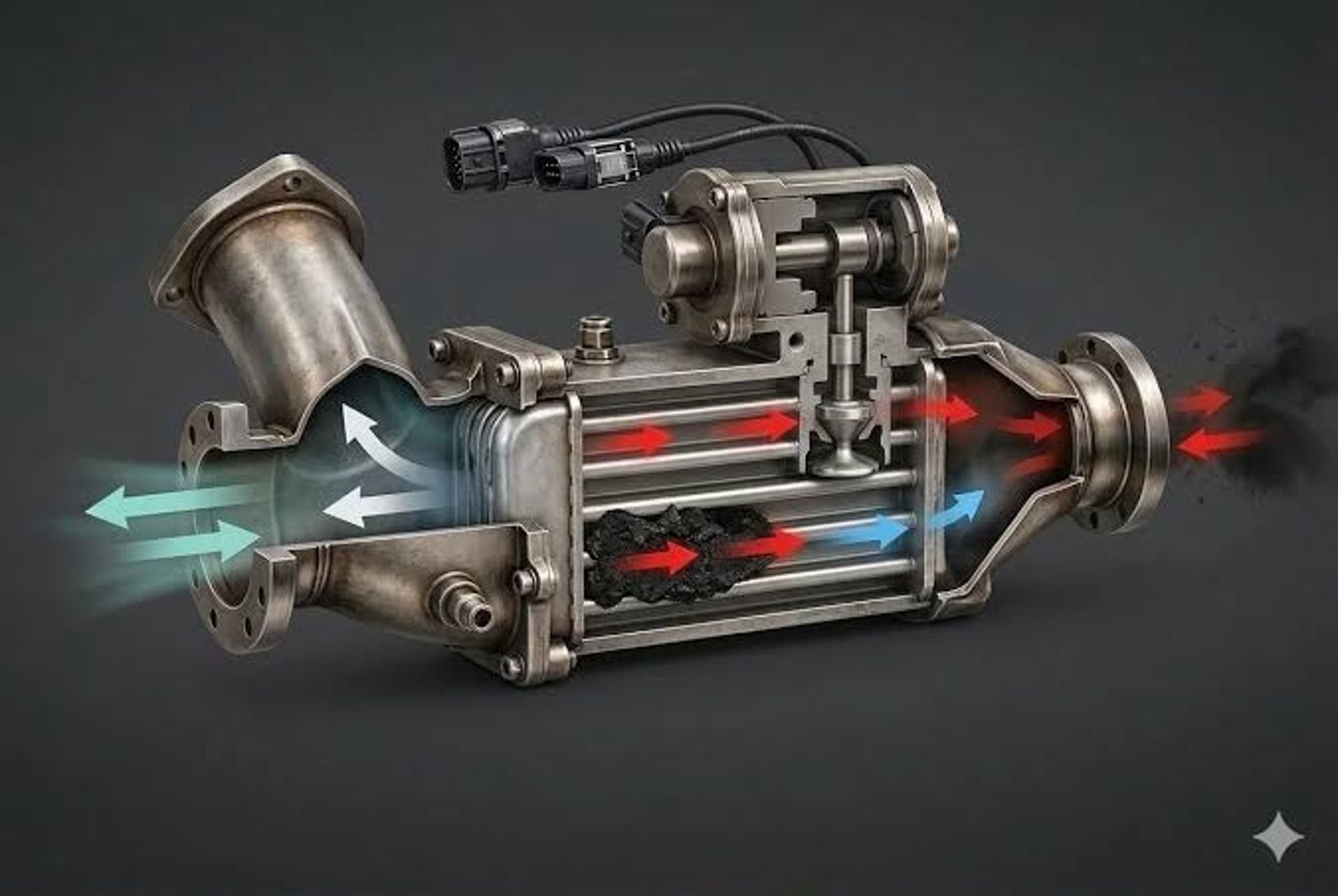
Most drivers have heard of the EGR valve, but far fewer know about the EGR cooler — until it goes wrong. It is a common failure on many modern diesels, and because its symptoms mimic other faults, it is worth understanding what it does and how it fails.
What the EGR cooler does
Recirculated exhaust gas is extremely hot. The EGR cooler uses engine coolant to bring that temperature down before the gas re-enters the engine, which improves the reduction in emissions and protects surrounding components. Because it carries coolant right next to hot exhaust gas, it works hard and can eventually crack or leak.
Signs of a failing EGR cooler
A leaking or failed EGR cooler often shows up as:
- Unexplained coolant loss with no obvious external leak
- White smoke from the exhaust, especially sweet-smelling
- The engine running hot or overheating
- An engine management light and related fault codes
- A drop in performance or rough running
Why it matters
A leaking cooler can allow coolant into the exhaust or intake system, which not only creates smoke but can lead to more serious engine damage if ignored. Because coolant loss and white smoke can also point to other faults, accurate diagnosis is essential before any parts are replaced.
Losing coolant or seeing white smoke?
Don't leave it to chance. We diagnose EGR cooler faults accurately and advise on the right solution before a small leak becomes a big bill.
Key takeaways
- The EGR cooler lowers the temperature of recirculated exhaust gas.
- A leaking cooler can push coolant into the exhaust or intake.
- Symptoms include coolant loss, white smoke and overheating.
- A leaking EGR cooler should be diagnosed promptly to avoid bigger damage.
Frequently asked questions
Can a leaking EGR cooler be mistaken for a head gasket fault?
Yes. Coolant loss and white smoke are common to both, which is why proper diagnosis matters before any major work is quoted. We confirm the real source before recommending a solution.
Is it safe to keep driving with a suspected EGR cooler leak?
It is not advisable. Losing coolant risks overheating and further engine damage, so it is best to have it checked promptly rather than continuing to top up.
Want advice for your vehicle?
Speak to a specialist for honest, no-pressure guidance tailored to your car and how you drive.