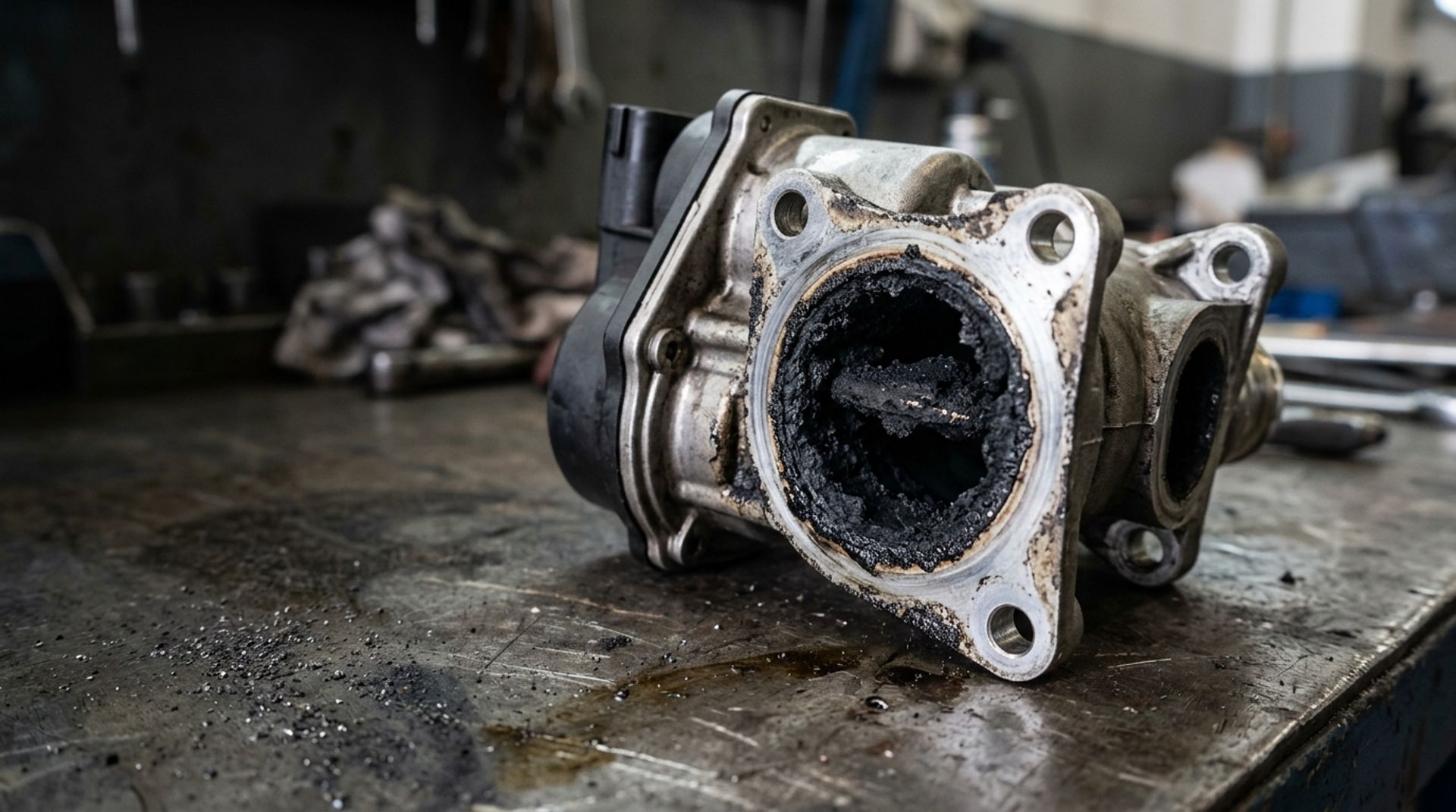
The EGR valve is one of the most common culprits behind everyday diesel running problems. When it clogs with soot or sticks, the symptoms can be mistaken for all sorts of other faults — so knowing the tell-tale signs saves time and money.
What the EGR valve does
The EGR (Exhaust Gas Recirculation) valve routes a portion of exhaust gas back into the engine to lower combustion temperatures and reduce NOx emissions. Because it constantly handles sooty exhaust gas, it gradually builds up carbon — and that is where the trouble starts.
The symptoms to recognise
A faulty or clogged EGR valve commonly causes:
- A rough, lumpy or unstable idle
- Hesitation or poor throttle response under acceleration
- Reduced power or the car dropping into limp mode
- Poorer fuel economy than usual
- An engine management light and stored fault codes
- Increased smoke from the exhaust
Stuck open vs stuck closed
A valve stuck open lets too much exhaust gas in at the wrong time, causing rough running and hesitation, especially at low speed. A valve stuck closed can raise combustion temperatures and increase NOx. Both states usually trigger a warning light, and both put extra soot into the DPF — which is why EGR and DPF problems so often go hand in hand.
Not sure it's the EGR?
These symptoms overlap with other faults, so guesswork gets expensive. We diagnose the real cause and tell you honestly whether cleaning or replacement is the right solution.
Key takeaways
- A clogged EGR valve causes rough idling, hesitation and poor economy.
- A valve stuck open or closed can trigger limp mode and warning lights.
- EGR soot build-up is often linked to short-journey driving.
- We diagnose whether cleaning or replacement is the right solution.
Frequently asked questions
Can a faulty EGR valve cause a DPF problem too?
Yes. A sticking or clogged EGR valve can put extra soot into the exhaust, which speeds up DPF blockage. That is why the two systems are so often diagnosed together.
Can an EGR valve be cleaned rather than replaced?
Sometimes. If the valve is simply carboned up it may clean up well, but a mechanically or electrically failed valve needs replacing. We diagnose which applies before recommending anything.
Want advice for your vehicle?
Speak to a specialist for honest, no-pressure guidance tailored to your car and how you drive.