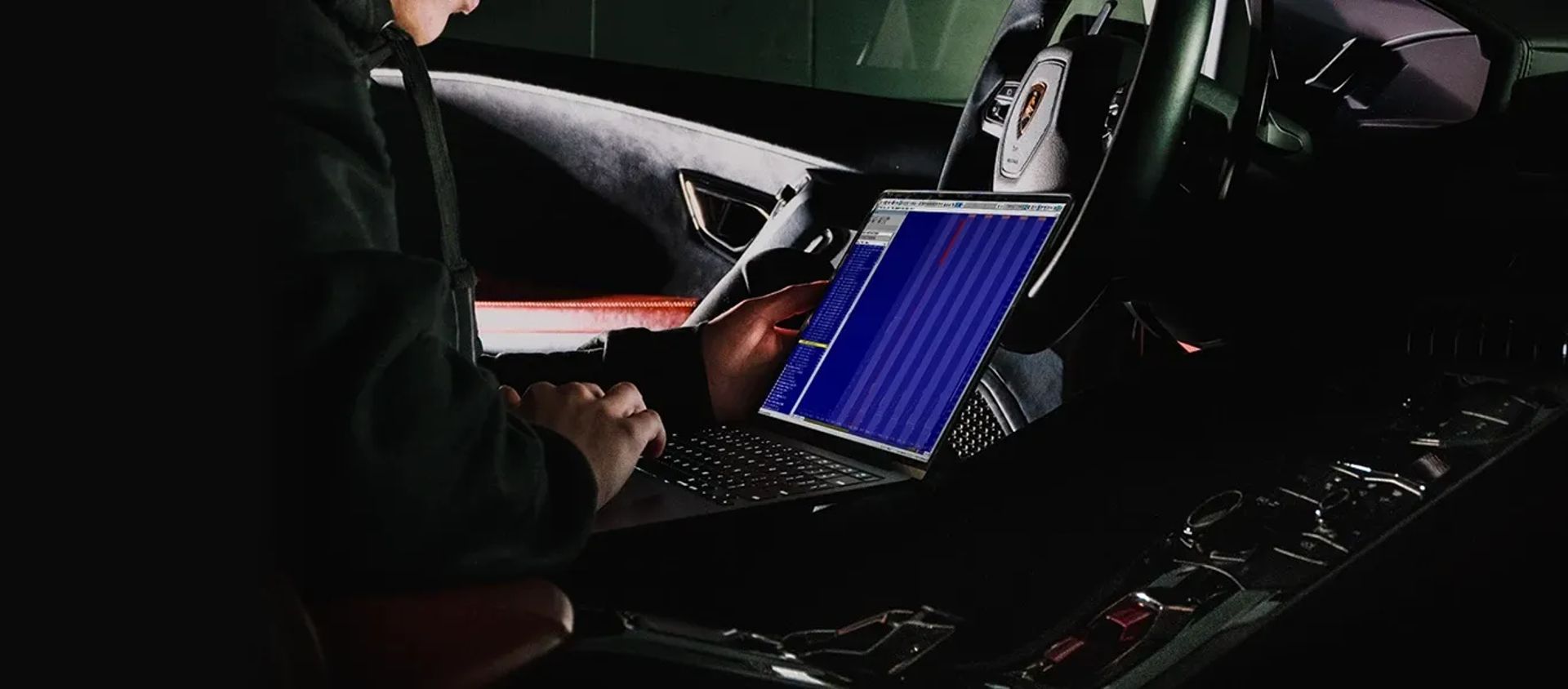
Remapping can sound mysterious, but the process is methodical and repeatable. It comes down to three stages: safely reading the data already in your ECU, carefully optimising the relevant maps, and writing the improved file back. Done properly, every step is measured and reversible.
Step 1: Reading the original file
The first job is to take an exact copy of the software currently in your engine control unit. This original file is stored securely so your car can always be returned to its factory state. Reading is done either through the diagnostic port or, on locked or newer ECUs, on the bench.
Step 2: Optimising the maps
The ECU contains dozens to hundreds of calibration tables — or maps — that control fuelling, boost, ignition timing and torque limits. A remap adjusts the relevant tables to release the performance the manufacturer left on the table for reasons like global fuel quality, emissions targets and model tiering.
A well-developed file focuses on:
- Smoothing throttle response and torque delivery
- Optimising boost and fuelling for cleaner, stronger power
- Respecting the engine's mechanical and thermal limits
- Keeping safety margins intact for long-term reliability
Step 3: Writing and verifying
The optimised file is written back to the ECU, then the car is checked to confirm everything runs cleanly. Where appropriate we verify results on the rolling road so the gains are proven rather than promised, and the car is road-tested before it is handed back.
Always reversible
Because your original file is saved, your car can be returned to factory software at any time. That is a core part of how we work responsibly.
Key takeaways
- Remapping is a three-stage process: read, tune, write.
- Your original factory file is always saved so the car can be returned to standard.
- A remap adjusts calibration maps like fuelling, boost and timing.
- Good tuning keeps safety margins intact for long-term reliability.
Frequently asked questions
Does remapping delete my original software?
No. We always take and store an exact copy of your original file first, so your car can be returned to factory software at any time.
How long does the remapping process take?
For most vehicles the read, tune and write process is completed within a couple of hours, including road-testing. More complex or bench-read ECUs can take longer, and we will always tell you in advance.
Want advice for your vehicle?
Speak to a specialist for honest, no-pressure guidance tailored to your car and how you drive.