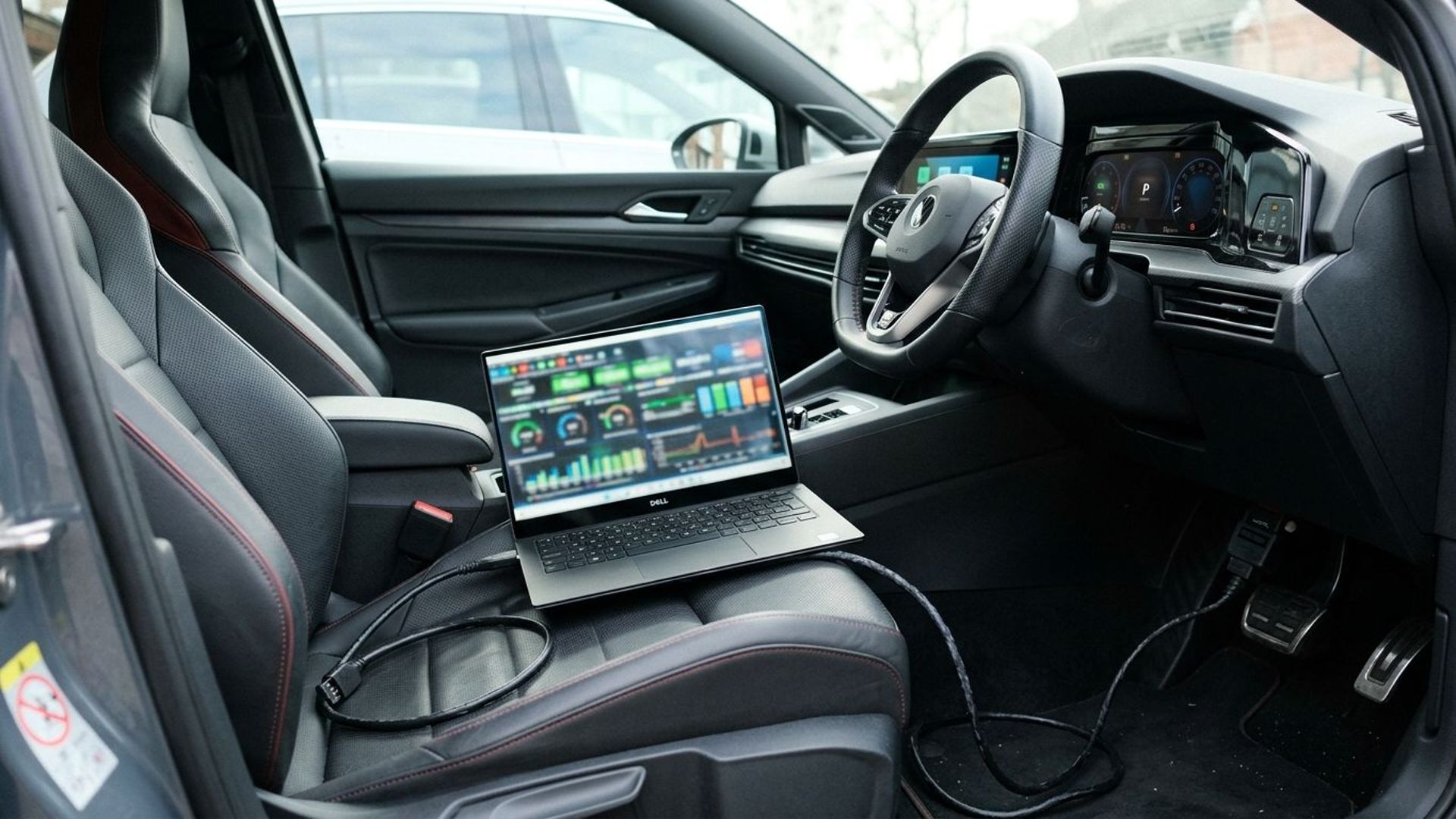
Yes, an ECU remap can be removed. The process involves writing the original factory calibration back to the ECU, returning the engine management to the same software it ran when it left the manufacturer. This is straightforward provided the original file was stored when the remap was first loaded — which is why choosing a tuner who keeps your original file is essential.
How removal works
The same equipment used to load the remap is used to restore the original software. The tuner connects to the ECU via the same method (OBD, bench or boot) and writes the stored factory file back to the ECU's memory. Once complete, the engine management system runs the original calibration exactly as it did before remapping. The process typically takes the same time as loading a remap — between 30 minutes and two hours depending on the vehicle and ECU access method.
Why the original file matters
Every ECU has a specific software version and calibration matched to its vehicle. There is no generic 'factory reset' button. The original file that was read from your specific ECU before remapping is the only guaranteed-correct restoration. If a tuner did not store this file, returning to standard becomes significantly more complicated — potentially requiring the manufacturer's diagnostic system to flash a factory calibration, which may not match the exact version your ECU originally ran.
Disconnecting the battery does not work
A common misconception is that disconnecting the battery will 'reset' the ECU and remove the remap. This is incorrect. ECU calibration data is stored in non-volatile flash memory — it persists with no power, just like the data on a USB drive. Disconnecting the battery resets adaptive learning values (fuel trims, idle corrections) but does not touch the calibration software itself.
What about tuning boxes?
A tuning box is different — it does not change the ECU software at all. Removing the box and reconnecting the original sensor wiring returns the vehicle to standard immediately with no software restoration needed. This is one of the trade-offs discussed in our tuning boxes comparison — easier to remove, but less integrated while fitted.
Flash counters and programming evidence
On many modern ECUs, restoring the original software does not erase all evidence that the ECU was modified. Flash counters increment each time the ECU is programmed and cannot typically be reset. Programming event logs may record the dates and methods used. This means that while the calibration itself is factory-standard, the ECU's internal records may still show that it was written to. Whether this matters depends on your specific situation — see our article on dealer detection for more detail.
Dealer software updates
If a dealer has updated the ECU software since your original file was stored, the version landscape may have changed. The original file we stored is the exact version from when the remap was loaded — not necessarily the very latest factory release. In most cases this is fine. If you need the absolute latest manufacturer software version, this would require a dealer flash rather than restoration of the stored file.
ECU replacement scenarios
If the ECU itself has been replaced (due to failure or as part of a recall), the replacement unit will have factory software already. There is nothing to remove. If you then want the new ECU remapped, it requires a fresh read and fresh calibration — the old stored file is for the old unit only.
Stage 2 and hardware considerations
Removing a Stage 2 remap returns the ECU software to factory, but it does not remove physical hardware modifications — an aftermarket exhaust, upgraded intercooler or intake remain fitted. Running factory software with Stage 2 hardware is not harmful in itself (the ECU simply does not use the hardware's full potential), but some components like decat pipes may trigger fault codes or emissions issues on standard software.
Gearbox software
On vehicles where the automatic gearbox or DSG was also remapped alongside the engine, both need to be returned to standard. Engine and gearbox software work together — restoring one without the other can cause shift-quality issues or torque-limit mismatches.
When returning to standard makes sense
Common reasons for removal include:
- Selling the vehicle — returning to standard for the new owner
- Warranty claim — removing modified software before a dealer powertrain inspection
- Lease return — meeting end-of-lease condition requirements
- Insurance change — if a new policy does not cover modifications
- Change of mind — if the owner simply prefers standard driving behaviour
- Platform upgrade — removing one tuner's file before loading a new calibration from another
Always reversible
We store every original file securely and can return your ECU to factory software at any point during ownership. The process is quick, non-destructive, and available whenever you need it — no questions asked.
Key takeaways
- Yes, a remap can be removed by restoring the original factory software to the ECU.
- This requires the original file to have been stored at the time of remapping.
- Disconnecting the battery does not remove a remap — the software is stored in non-volatile memory.
- Some ECU evidence (flash counters, programming logs) may remain even after restoration.
- Hardware modifications fitted for Stage 2 are not reversed by removing the software — they remain physically installed.
Frequently asked questions
Is removing a remap free?
Policies vary by tuner. We include restoration to standard software as part of our lifetime software warranty — there is no additional charge to return your vehicle to factory calibration at any time.
How long does it take to remove a remap?
Typically 30 minutes to two hours, depending on the ECU access method and vehicle. It is the same process as loading the remap, run in reverse.
Will my car drive normally after removal?
Yes — it will drive exactly as it did before remapping. The factory calibration is the same software the manufacturer developed for your vehicle. You may notice the performance difference, but driveability will be standard.
Can any tuner remove another tuner's remap?
In principle, yes — if they can read and write the ECU, they can load a factory file. However, the cleanest approach is using the original file that was stored from your specific ECU. If the original tuner stored your file, they are the best option for a guaranteed-correct restoration.
Does removing a remap reset the flash counter?
No. On ECUs that maintain a flash counter, it increments with each write operation. Removing the remap is itself a write operation that increments the counter further. The counter records total programming events, not current software state.
Want advice for your vehicle?
Speak to a specialist for honest, no-pressure guidance tailored to your car and how you drive.