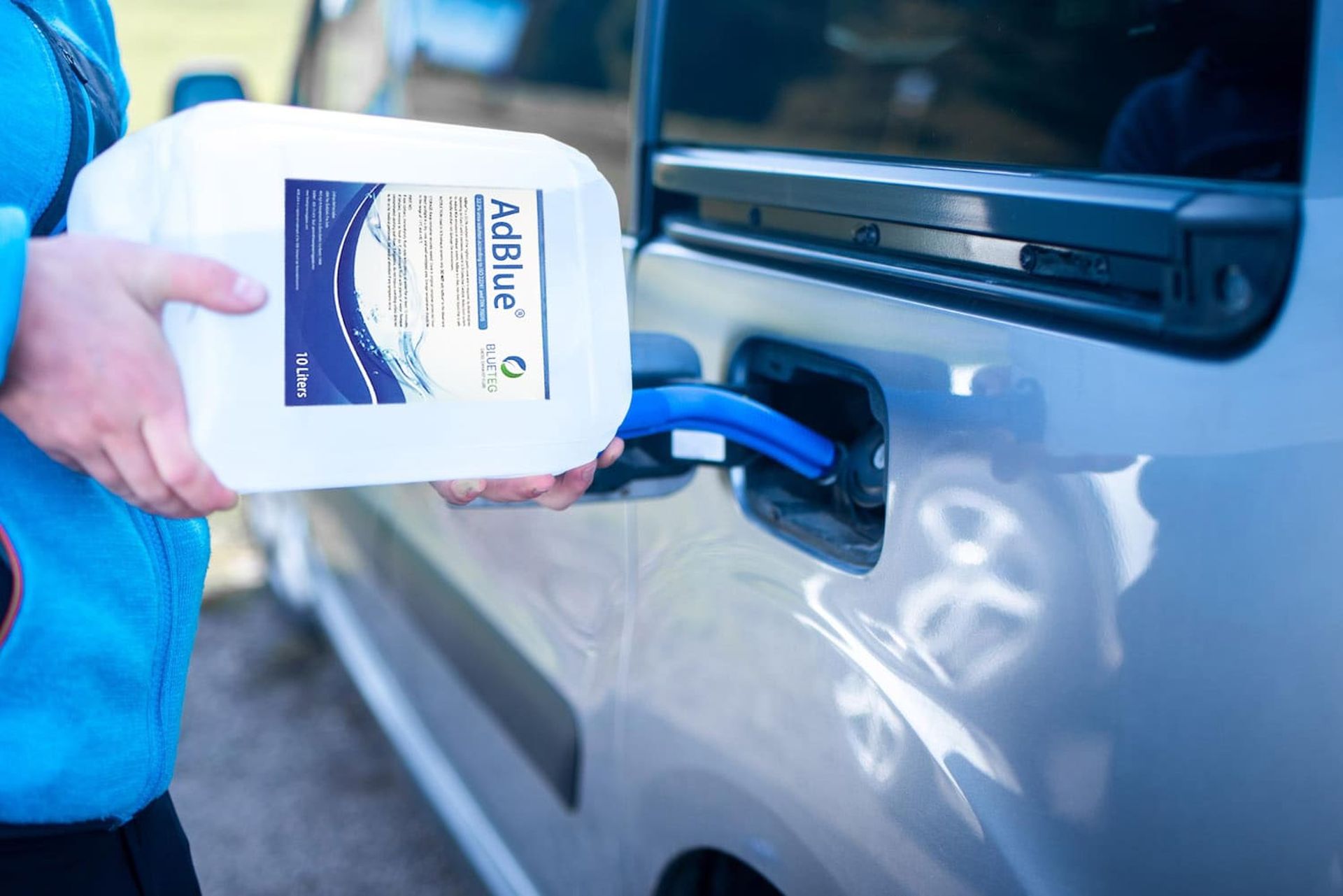
AdBlue and the SCR (Selective Catalytic Reduction) system are how many modern diesels keep their NOx emissions in check. It usually just works quietly in the background — but when it faults, it can be alarming. Here is a plain-English guide to what it does, why it causes trouble and the fact that we have solutions when it does.
What AdBlue does
AdBlue is a fluid injected into the exhaust, where it converts harmful nitrogen oxides (NOx) into harmless nitrogen and water. It is a consumable, so it is topped up like any other fluid as the car uses it up.
Why NOx matters
Nitrogen oxides are one of the emissions modern diesels are strictly limited on. The SCR system with AdBlue is the main way manufacturers meet those limits, which is why the car monitors it so closely.
Why it causes problems
Faults in the AdBlue or SCR system can trigger dashboard warnings and, on some vehicles, no-start countdowns that lock the car out until the fault is resolved. When that happens, we have solutions to get you moving again.
If you are seeing AdBlue or NOx warnings, we have solutions for:
- AdBlue system warnings and faults
- SCR and NOx sensor problems
- No-start countdowns and lockouts
- Persistent diesel emissions warning lights
We have the solution
Whatever AdBlue or NOx issue you are facing, we have solutions to sort it out. Talk to us about your vehicle and we will explain the best way forward.
Key takeaways
- AdBlue is injected into the exhaust to convert harmful NOx into nitrogen and water.
- It is a consumable fluid that simply needs topping up as it is used.
- SCR faults can trigger dashboard warnings and, on some vehicles, no-start countdowns.
- When the AdBlue system plays up, we have solutions to resolve it.
Frequently asked questions
What happens if I run out of AdBlue?
Modern diesels warn you well in advance and then begin a countdown. If AdBlue runs out completely, the car will usually refuse to restart once switched off, so it is important to top up before that point.
Can I top up AdBlue myself?
Yes. AdBlue is widely available and has its own filler cap, usually near the fuel filler. Just use a good-quality fluid and avoid spills. If warnings persist after topping up, the SCR system may need checking.
Want advice for your vehicle?
Speak to a specialist for honest, no-pressure guidance tailored to your car and how you drive.