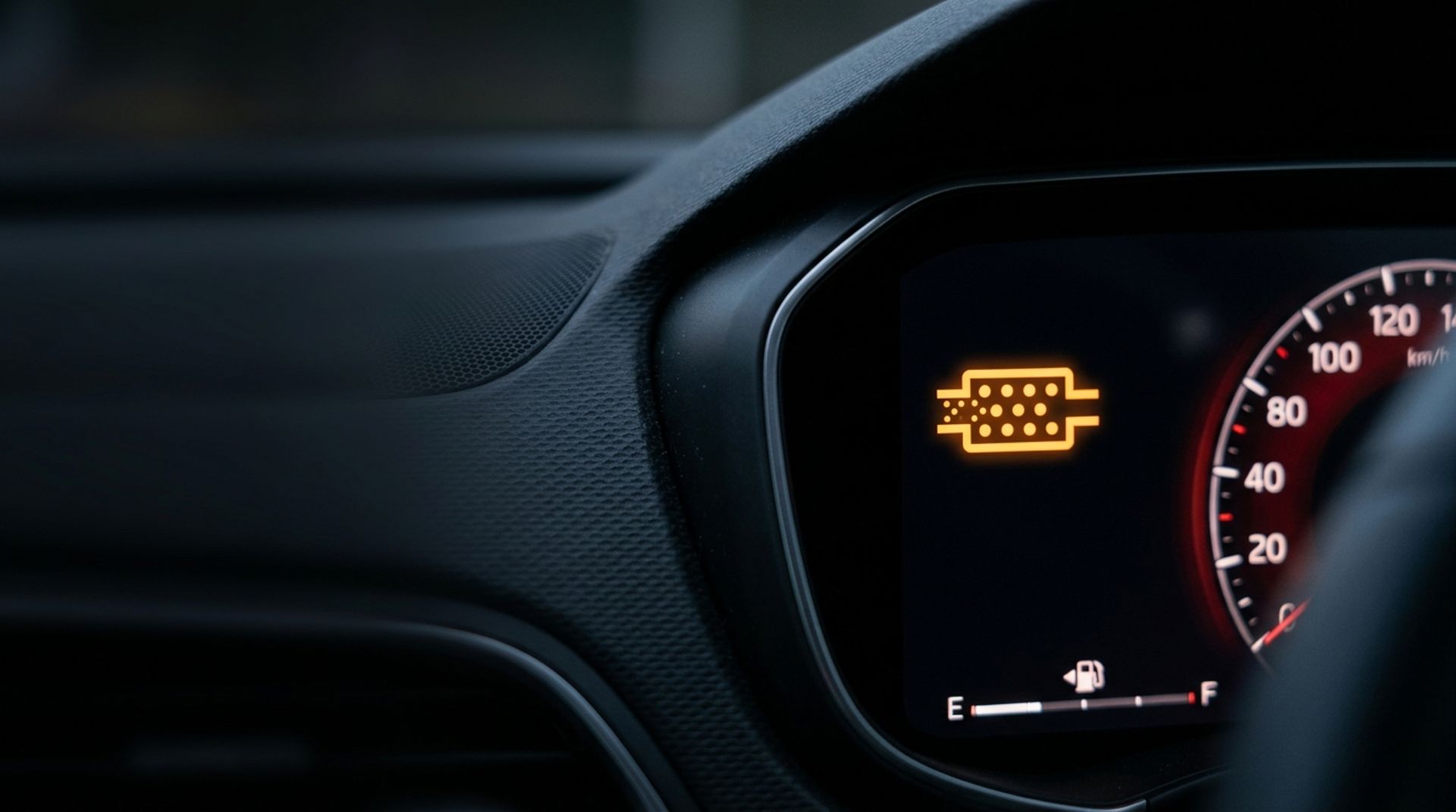
Seeing a DPF warning light can be alarming, but caught early it is usually straightforward to sort. What matters most is acting quickly rather than ignoring it and letting the blockage build.
What the light means
A DPF warning light usually means soot has built up beyond the normal level and the filter needs to regenerate. It is a prompt to help the car clean itself — not necessarily a sign of serious damage.
What to do first
If the DPF light appears:
- Where safe, take a steady drive at sustained speed to allow a regeneration
- Avoid lots of short, stop-start trips until it clears
- Do not ignore it if the light stays on or others join it
- Book a check early if it will not clear on its own
If additional warnings appear or the car enters limp mode, stop driving it hard and get it looked at. At that stage a controlled regeneration or diagnosis is the safest route.
Act early, save money
A DPF caught at the warning-light stage is far cheaper and simpler to sort than a fully blocked filter.
Key takeaways
- A DPF light usually means the filter needs to regenerate.
- A steady drive can often clear it if caught early.
- Ignoring it risks a heavier, costlier blockage.
- If limp mode or extra warnings appear, get it checked.
Frequently asked questions
Can I keep driving with the DPF light on?
Usually for a short time — in fact a steady drive at sustained speed can help it regenerate and clear. But if the light stays on, or limp mode or extra warnings appear, get it checked promptly.
Will the DPF light clear on its own?
Often, yes, if the filter can complete a regeneration during a longer drive. If it will not clear, it is best to book a check before the blockage worsens.
Want advice for your vehicle?
Speak to a specialist for honest, no-pressure guidance tailored to your car and how you drive.